How a Woven Label Becomes a Brand’s Single Source of Truth
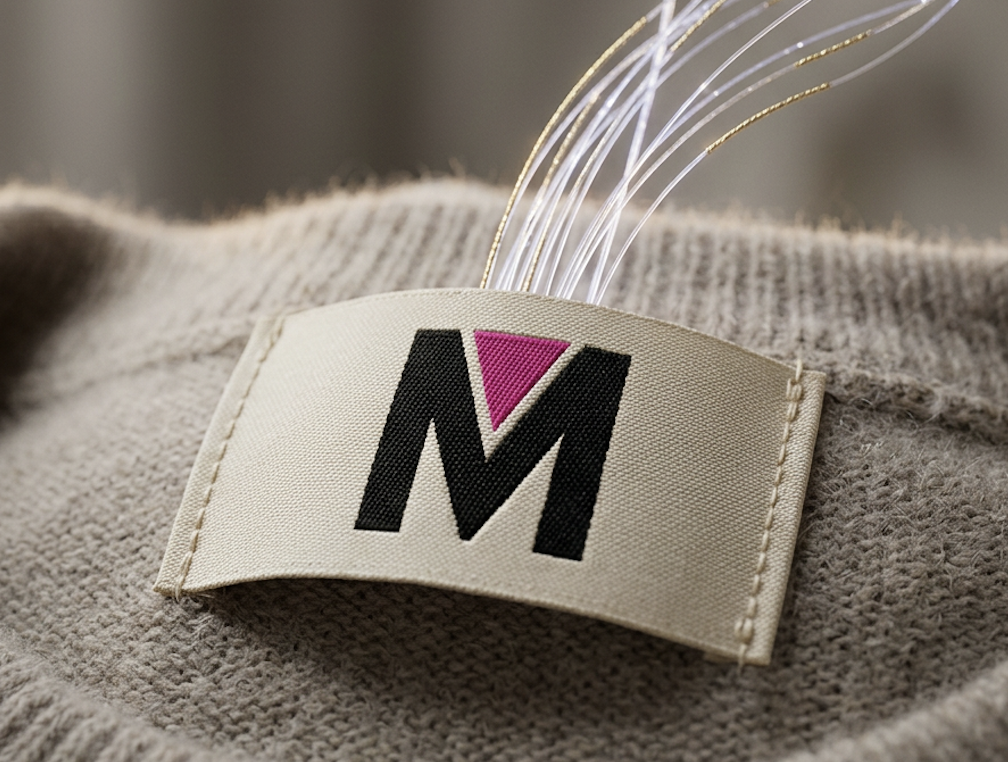
Ever since I can remember, the woven label at the back of a garment has been a margin line. Half a cent per unit, managed out of a trim-budget that few executives looked at. The change we talked about 18 months ago is now here. The inconspicuous label has quietly become the most strategic component in apparel product identity — and the merchandising and compliance teams are typically the last function in the brand to notice.
Four carriers, one label
In the past, the label used to carry a SKU, legible to a warehouse operator. Now it carries up to four data carriers simultaneously: a QR code for consumer reach, NFC for tap-to-read engagement, RFID UHF Gen2 for store and supply-chain operations, and a hybrid tag combining UHF and NFC in a single woven trim component. Maxim has led the development of the hybrid format — one production unit, one label, delivering store-operations scanning, consumer engagement, and tamper-resistant authentication all in one.
Six jobs, one component
Strip the terminology away and a modern woven label is doing six jobs at once: unique item identity, store operations, consumer engagement, resale, compliance record (DPP, CSDDD, UFLPA, EPR), and chain-of-custody provenance.
Job three is the one most procurement teams underprice. EU data suggests 35–50 percent of consumers will scan a DPP within the first year of purchase, and luxury item pilots are running above 60 percent. That is an unprecedented free direct-to-consumer channel that lives on the garment for its full life. No other component in the BOM can deliver this. Not the hang tag, not the care label, not the packaging.
Where the trust boundary sits
There are three recognized approaches in the “label becomes traceability carrier” space, and the easiest way to read them is by where the trust boundary sits. Some take a platform-led approach — a strong software layer with a converter network underneath. Others take a brand-identity-led approach, with the DPP layer added above a trim package. Maxim’s EcoTrac is the manufacturing-led approach: the encoding, the serialization, the variable data, and the registry hand-off all happen inside the owned label factory.
The meaningful difference is not which platform has the nicer interface. A software-led model puts the brand’s traceability claims in a vendor’s database, sourced from a converter they do not own. A manufacturing-led model puts the claims in a production log, sourced from a facility the brand’s auditors can walk into.
When the regulator asks where a recycled-content claim originated, the second answer is what survives.
The window is closing fast
The 2027 enforcement date is fixed. The 2026 buying calendar that decides which label supplier meets the requirements — it is being decided right now, quarter by quarter. Merchandising and compliance teams that treat the next trim review as “renew the spec, hold the price” will spend the following eighteen months paying for a label that was the cheapest line in the BOM and the most expensive gap in the data stack.
The woven label is now the brand’s single source of truth. The only question is whether you are sourcing it from the facility that will own the answer when someone asks.